

May 25, 2013 13:37 UTC

learningenglish

The Limits to Organic Farming in Feeding the World

TEXT SIZE - +


Download this story as a PDF

This is the VOA Special English Agriculture Report.

Organic farming avoids the use of chemical pesticides and manmade fertilizers. Supporters say organic farming is better for the environment than conventional methods. But studies have shown that organic farming generally produces less food per hectare.

That lower yield means feeding the world organically would require more land. But good farmland is limited. And scientists say deforestation from the clearing of land for agriculture is already a problem for climate change.
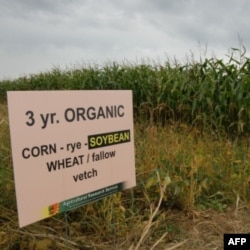
 

A new study shows organic crops typically yield less than those raised with artificial fertilizers and pesticides
In a new study, researchers wanted to measure the difference between conventional and organic yields. So they combined the results of sixty-six earlier studies. They found that some organic farms can yield almost as much as conventional farms. But most cannot.


Verena Seufert at McGill University in Montreal, Canada, was the lead author of the study in the journal Nature.

VERENA SEUFERT: "Conventional yields are typically higher than organic yields. But with certain management practices, certain environmental conditions, and certain crop species, this yield difference can be quite small."

On average, organic farms produced twenty-five percent less compared to conventional farms. But yields of organic fruits and other perennial crops nearly equaled the yields from conventional ones. So did the yields of legumes such as soybeans. Legumes produce some of their own nitrogen fertilizer.

However, organic vegetables and cereal crops like maize and wheat had a lot lower yields compared to conventionally grown crops.

Ms. Seufert says the soil on organic farms holds water better, and that can reduce the yield difference. Also, organic farmers can improve their yields by making sure their crops get enough fertilizer. But increasing the nitrogen is harder to do organically, using just animal waste and crop rotations.

Organic farmers rotate food crops with plants that fertilize the soil. But while these "cover," or fertilizer, crops are growing, food crops have to be grown on other land. And if farmers use manure, they have to feed the animals that produce it, and that requires grazing land or crop land.

The United Nations predicts that world demand for food will grow seventy percent by the middle of the century. John Reganold is a soil scientist at Washington State University. He says no one should dismiss organic agriculture as part of the solution.

JOHN REGANOLD: "I think when people see these studies, their first reaction is, 'Well, my goodness, organic farming can't feed the world.' Guess what? Conventional farming cannot sustainably feed the world."

Mr. Reganold -- who was not part of the study -- says farming is increasingly a combination of organic and conventional methods.

JOHN REGANOLD: "And it's really going to be a blend of these, I think, more diverse systems that are going to save us."

And that's the VOA Special English Agriculture Report. To read and listen to more stories for people learning English, go to voaspecialenglish.com. You can also find our captioned videos at the VOA Learning English channel on YouTube. I'm Jim Tedder.

___

Contributing: Steve Baragona

This forum has been closed.
Comment Sorting
Comments page of 2
    Next 
by: Marty Kassowitz
05/07/2012 9:44 PM
A study by the Rodale Institute spanning 30 years concluded the organic agriculture outproduced "conventional" or what I call chemical farming these days. http://organicconnectmag.com/wp/organic-trumps-conventional-farming-in-30-year-study/


by: m
05/06/2012 2:57 AM
OK that's a good news for learning and listing thanks a lot,


by: green_ville.
05/05/2012 5:37 PM
for request of food in the word , organic yield stay midle reality, it is us reality "world demand for food will grow seventy percent by the middle of the century"


by: Thong Le
05/04/2012 8:07 PM
It is time we turn back organic method. we should produce the safe and nuture food for people.


by: OLIMAR OLIVEIRA rodrigues
05/03/2012 3:45 AM
combination of organic and conventional methods, is the key point, because we need big productions, but we can not make organic production, in many places the organic pruduction is necessary to produce more, but it sure costs are biger.


by: Sean
05/02/2012 8:59 PM
Deforestation is a problem, which is why we need to start replenishing the soil of the land that we have already cleared out. More people need to start growing food in their backyards. Organic sustainable food is a must if we are going to continue on as a successful species.


by: Leo
05/02/2012 5:27 PM
Good report! I guess at the end we can't have only organic farms, we will need a mix of both organic and regular farms to attend the demand and make it sustainable.


by: Ngan Thai
05/02/2012 11:11 AM
The only best solution to solve the food dilemma is that the world population must somehow be drastically reduced year after year, not the other way around. Also those fortunate people living in the developed countries must eat less and minimize their food waste.


by: Thorn
05/02/2012 1:03 AM
I need to know a lot of agriculture and I want to study by online and to be a member of .......


by: Laurent
05/02/2012 12:30 AM
The lack of land crop is the major fact of animal feed. And, actually, how these studies have been made ? Organic soil is a process, which require time. Moreover, organic farming need experiment, more research because each soil need specific answer

Comments page of 2
    Next