


This is the VOA Special English Agriculture Report.
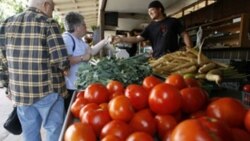
Scientists have made a genetic map of the tomato. Tomatoes are second only to potatoes as the world's most valuable vegetable crop. Eight years of work went into making the map, or genome. Three hundred scientists around the world took part in the project to sequence the tomato's DNA code. Giovanni Giuliano, a researcher in Italy, is part of the Tomato Genome Consortium.
Download PDF: Tomato's Genetic Secrets Are Peeled Away
GIOVANNI GIULIANO: "We started as ten countries and we now are fourteen."
Mr. Giuliano says having the tomato's genetic map will help growers who are always trying to produce a better tomato.
GIOVANNI GIULIANO: "And of course, this will be facilitated now by the fact that we now know not only what genes are there, but their order."
Researchers published the genome of a tomato used by Heinz, the American food company famous for its tomato ketchup. The thick sauce is used on hamburgers, hot dogs and other foods.
Heinz's research manager, Rich Ozminkowski, says the company knows what it wants in a tomato.
RICH OZMINKOWSKI: "Traits like sugars and, for Heinz, viscosity, or the juice thickness, and the redness of the tomatoes are all very critical traits for us, for our products. Those are all controlled by a lot of different genes within a tomato naturally."
Mr. Ozminkowski says genome sequencing takes away much of the guesswork for breeders of tomatoes or other crops that have been mapped.
RICH OZMINKOWSKI: "By having the genome information, we can pick out those tomato plants that have more of those genes."
Until the late nineteen sixties, the tomatoes that Heinz used to make ketchup often cracked open on the vine after a heavy rain.
RICH OZMINKOWSKI: "Heinz had set about trying to put together a variety of tomatoes that would resist that cracking."
Breeders used the traditional methods of mating generations of different varieties. The tomatoes they were trying to develop not only had to resist cracking. They also had to resist disease. And they had to be easy to harvest mechanically.
Finally the company came up with the tomato it wanted, called the Heinz 1706. Mr. Ozminkowski says the job would have been much easier if there had been a genetic map to follow.
RICH OZMINKOWSKI: "The tools available back when 1706 was developed, it was all very, very conventional breeding. There were no genetic tools. You could not look at sequences. You could not do comparisons. And that is what makes the genomic project and the technologies that have spun off of that so interesting."
But the work is not just about making better ketchup. Climate change may force many crops to adjust to new conditions. And Mr. Ozminkowski says researchers are already using the new genetic tools to help fight new plant diseases.
RICH OZMINKOWSKI: "And so this is going to give us even more, because there are new diseases that are becoming problems within California and around the world."
Researchers published the tomato genome in the journal Nature.
And that's the VOA Special English Agriculture Report. You can read, listen and learn English with our stories and more at voaspecialenglish.com. You can also find more information about tomatoes. I'm Jim Tedder.
Scientists have made a genetic map of the tomato. Tomatoes are second only to potatoes as the world's most valuable vegetable crop. Eight years of work went into making the map, or genome. Three hundred scientists around the world took part in the project to sequence the tomato's DNA code. Giovanni Giuliano, a researcher in Italy, is part of the Tomato Genome Consortium.
Download PDF: Tomato's Genetic Secrets Are Peeled Away
GIOVANNI GIULIANO: "We started as ten countries and we now are fourteen."
Mr. Giuliano says having the tomato's genetic map will help growers who are always trying to produce a better tomato.
GIOVANNI GIULIANO: "And of course, this will be facilitated now by the fact that we now know not only what genes are there, but their order."
Researchers published the genome of a tomato used by Heinz, the American food company famous for its tomato ketchup. The thick sauce is used on hamburgers, hot dogs and other foods.
Heinz's research manager, Rich Ozminkowski, says the company knows what it wants in a tomato.
RICH OZMINKOWSKI: "Traits like sugars and, for Heinz, viscosity, or the juice thickness, and the redness of the tomatoes are all very critical traits for us, for our products. Those are all controlled by a lot of different genes within a tomato naturally."
Mr. Ozminkowski says genome sequencing takes away much of the guesswork for breeders of tomatoes or other crops that have been mapped.
RICH OZMINKOWSKI: "By having the genome information, we can pick out those tomato plants that have more of those genes."
Until the late nineteen sixties, the tomatoes that Heinz used to make ketchup often cracked open on the vine after a heavy rain.
RICH OZMINKOWSKI: "Heinz had set about trying to put together a variety of tomatoes that would resist that cracking."
Breeders used the traditional methods of mating generations of different varieties. The tomatoes they were trying to develop not only had to resist cracking. They also had to resist disease. And they had to be easy to harvest mechanically.
Finally the company came up with the tomato it wanted, called the Heinz 1706. Mr. Ozminkowski says the job would have been much easier if there had been a genetic map to follow.
RICH OZMINKOWSKI: "The tools available back when 1706 was developed, it was all very, very conventional breeding. There were no genetic tools. You could not look at sequences. You could not do comparisons. And that is what makes the genomic project and the technologies that have spun off of that so interesting."
But the work is not just about making better ketchup. Climate change may force many crops to adjust to new conditions. And Mr. Ozminkowski says researchers are already using the new genetic tools to help fight new plant diseases.
RICH OZMINKOWSKI: "And so this is going to give us even more, because there are new diseases that are becoming problems within California and around the world."
Researchers published the tomato genome in the journal Nature.
And that's the VOA Special English Agriculture Report. You can read, listen and learn English with our stories and more at voaspecialenglish.com. You can also find more information about tomatoes. I'm Jim Tedder.