

Accessibility links

Breaking News

Former Cuban President Fidel Castro Dies at 90

Cuban President Fidel Castro attends a conference on terrorism in Havana's convention centre June 3, 2005.

Former Cuban President Fidel Castro is dead at the age of 90, his brother, Cuban President Raul Castro announced.

Fidel Castro’s communist government survived a U.S.-backed invasion of Cuban exiles, a superpower missile crisis, assassination plots and decades of U.S. economic sanctions. But Castro lived long enough to see Washington announce the re-establishment of full diplomatic relations with Havana and the subsequent visit by a U.S. president to the island in March 2016.

He will be cremated Saturday.

Fidel Castro Ruz was born August 13, 1926, and grew up to become one of the leaders of the movement against the dictatorship of Fulgencio Batista. He led a guerrilla force that eventually routed Batista’s army and took over the island in 1959.

Fidel Castro: Through the Years
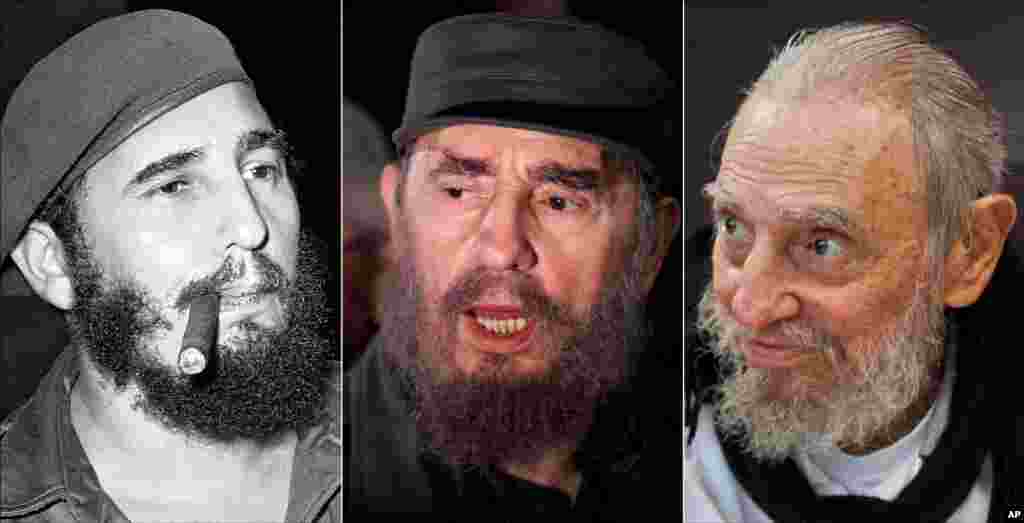
This combo of three file photos shows Fidel Castro, from left; smoking a cigar in Havana, Cuba, April 29, 1961; speaking to the media while on a mission to collect Elian Gonzales in Washington, D.C., April 6, 2000; and at his Havana home on Feb. 13, 2016.
1/14 This combo of three file photos shows Fidel Castro, from left; smoking a cigar in Havana, Cuba, April 29, 1961; speaking to the media while on a mission to collect Elian Gonzales in Washington, D.C., April 6, 2000; and at his Havana home on Feb. 13, 2016.
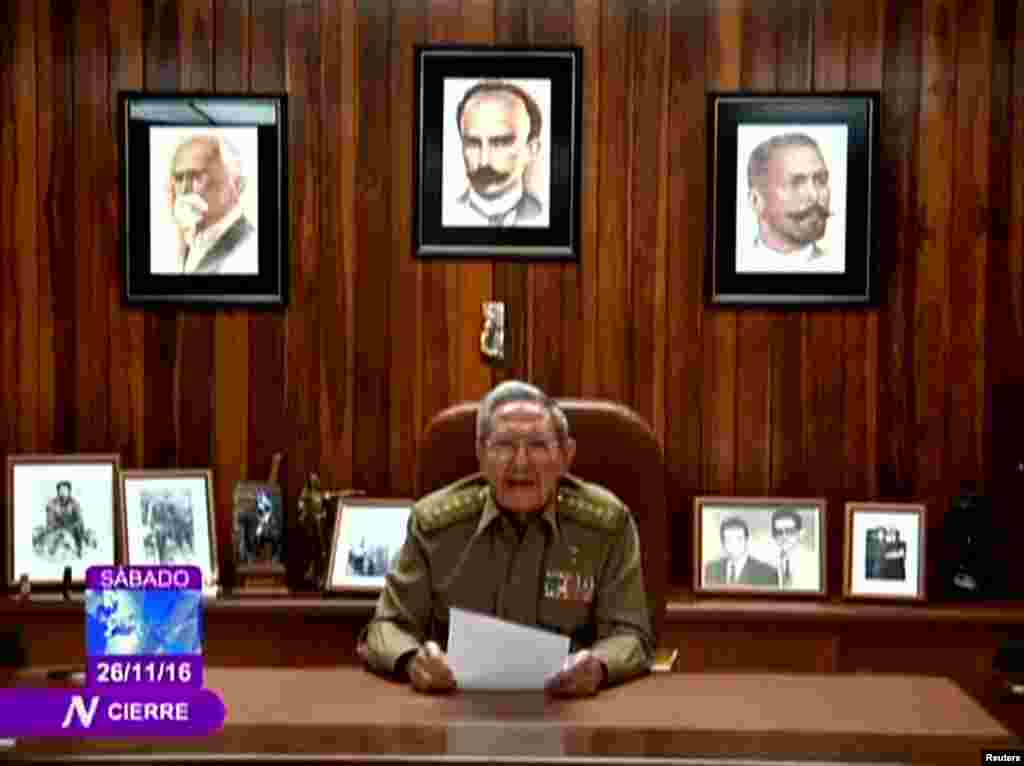
Cuba's President Raul Castro announces the death of his brother, revolutionary leader Fidel Castro, in a still image from government television in Havana, Cuba Nov. 26, 2016.
2/14 Cuba's President Raul Castro announces the death of his brother, revolutionary leader Fidel Castro, in a still image from government television in Havana, Cuba Nov. 26, 2016.
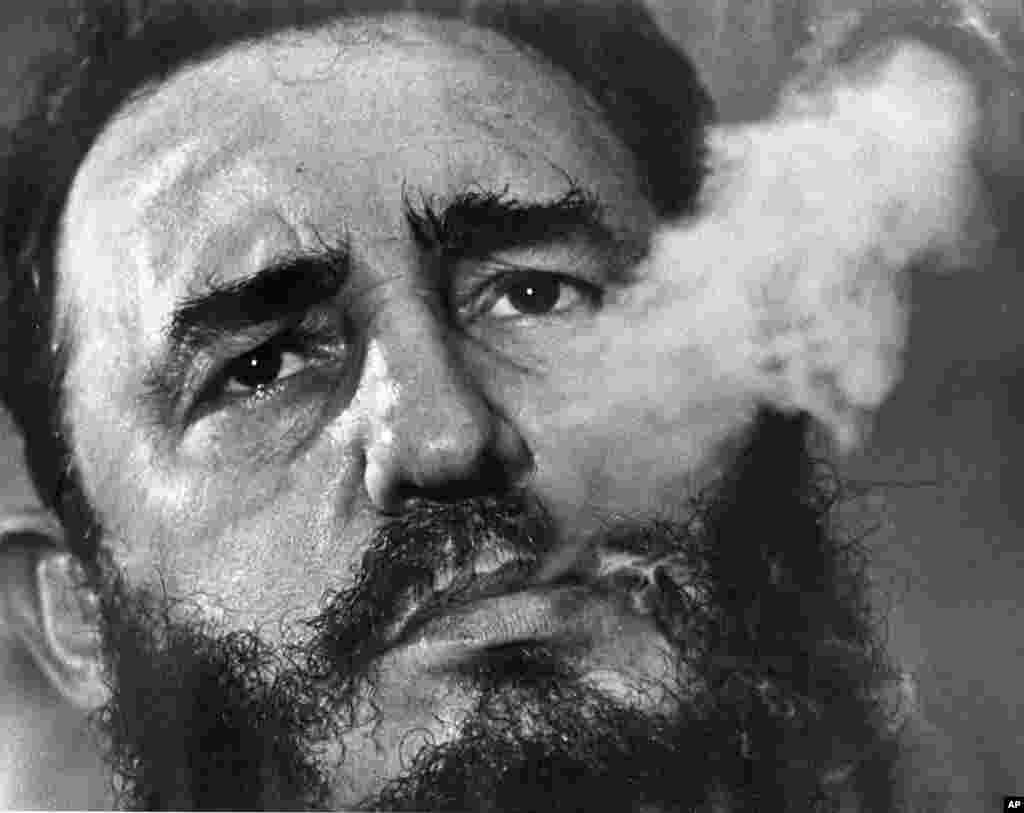
FILE - Cuban Prime Minister Fidel Castro exhales cigar smoke during an interview at his presidential palace in Havana, Cuba, March 1985. Castro, a Havana attorney who fought for the poor, overthrew dictator Fulgencio Batista's government on Jan. 1, 1959.
3/14 FILE - Cuban Prime Minister Fidel Castro exhales cigar smoke during an interview at his presidential palace in Havana, Cuba, March 1985. Castro, a Havana attorney who fought for the poor, overthrew dictator Fulgencio Batista's government on Jan. 1, 1959.
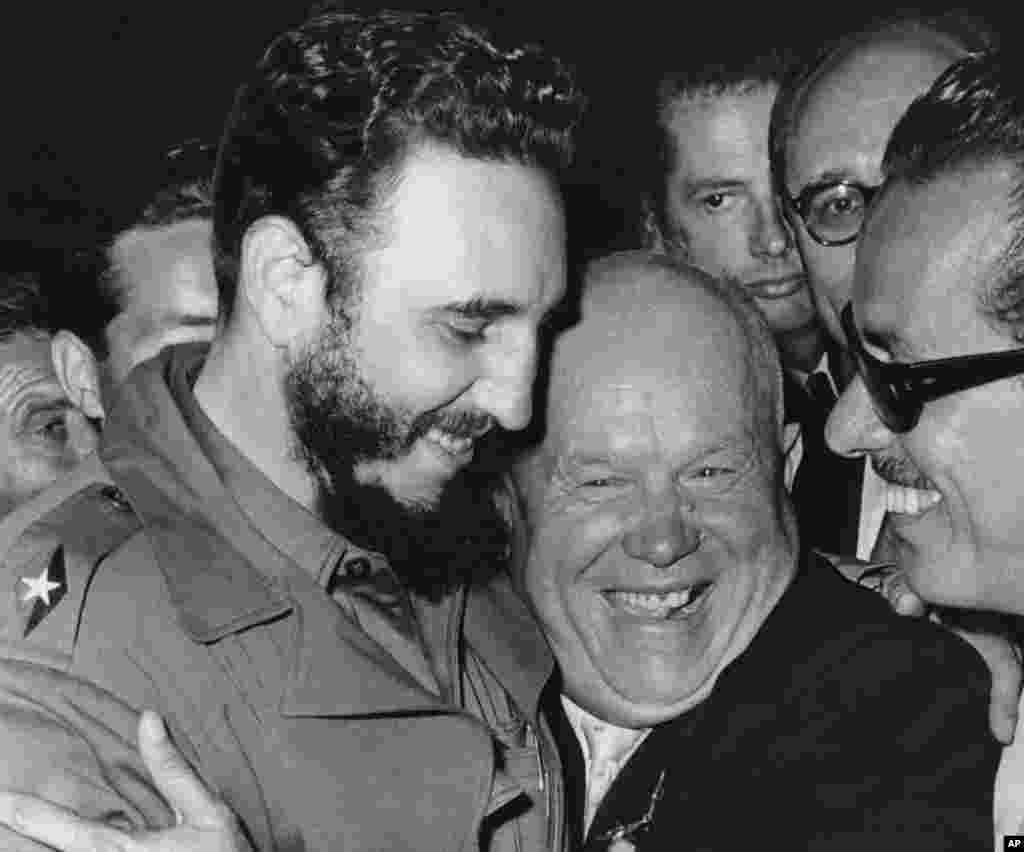
FILE - In a Sept. 20, 1960 file photo, Cuban leader Fidel Castro, left, and Soviet leader Nikita Khrushchev hug at the United Nations.
4/14 FILE - In a Sept. 20, 1960 file photo, Cuban leader Fidel Castro, left, and Soviet leader Nikita Khrushchev hug at the United Nations.
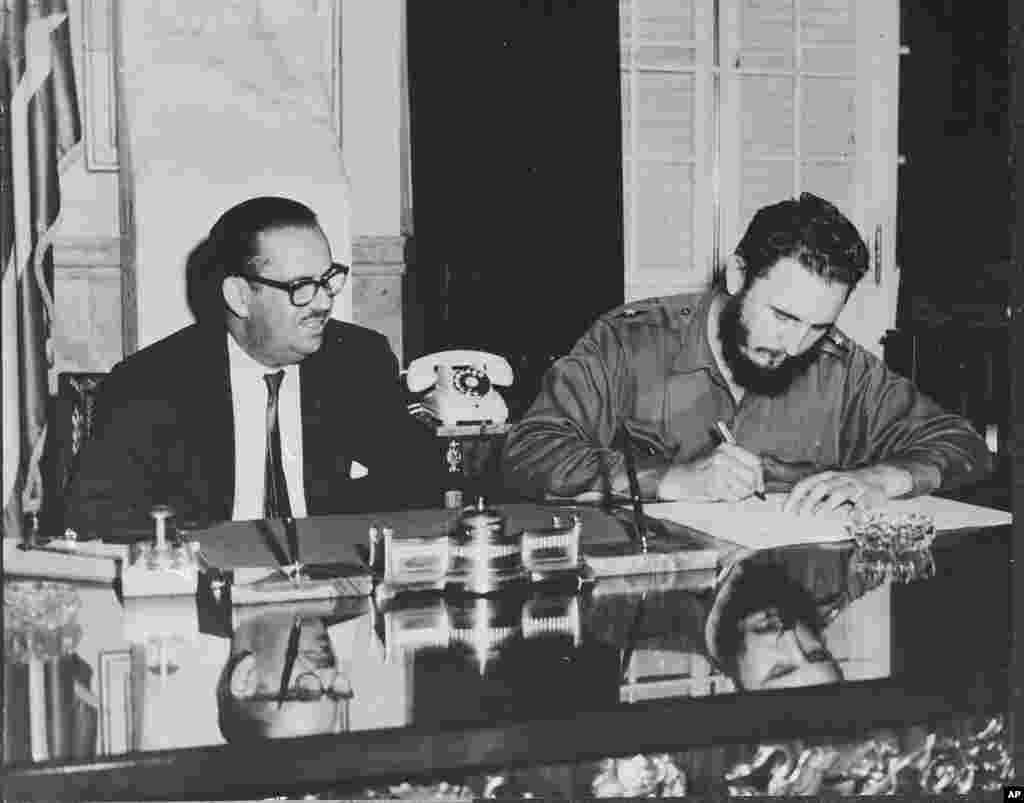
FILE - Cuban Prime Minister Fidel Castro signs decree nationalizing all American-owned banks in Cuba, Sept. 17, 1960.
5/14 FILE - Cuban Prime Minister Fidel Castro signs decree nationalizing all American-owned banks in Cuba, Sept. 17, 1960.
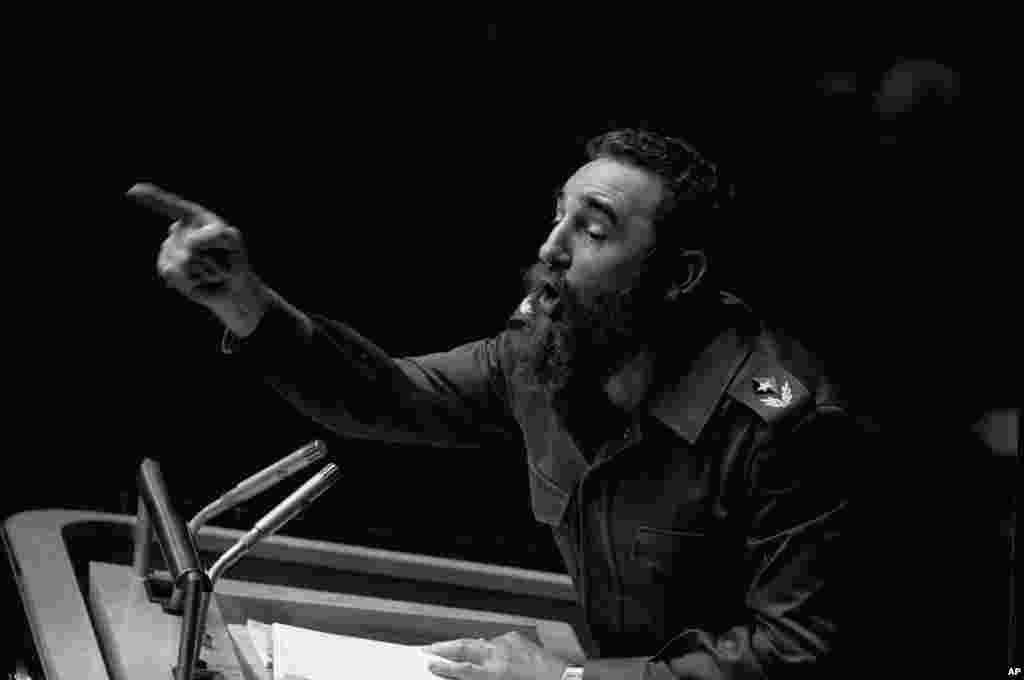
FILE - In this Oct. 12, 1979, file photo, Cuban President Fidel Castro points during his lengthy speech before the U.N. General Assembly, in New York.
6/14 FILE - In this Oct. 12, 1979, file photo, Cuban President Fidel Castro points during his lengthy speech before the U.N. General Assembly, in New York.
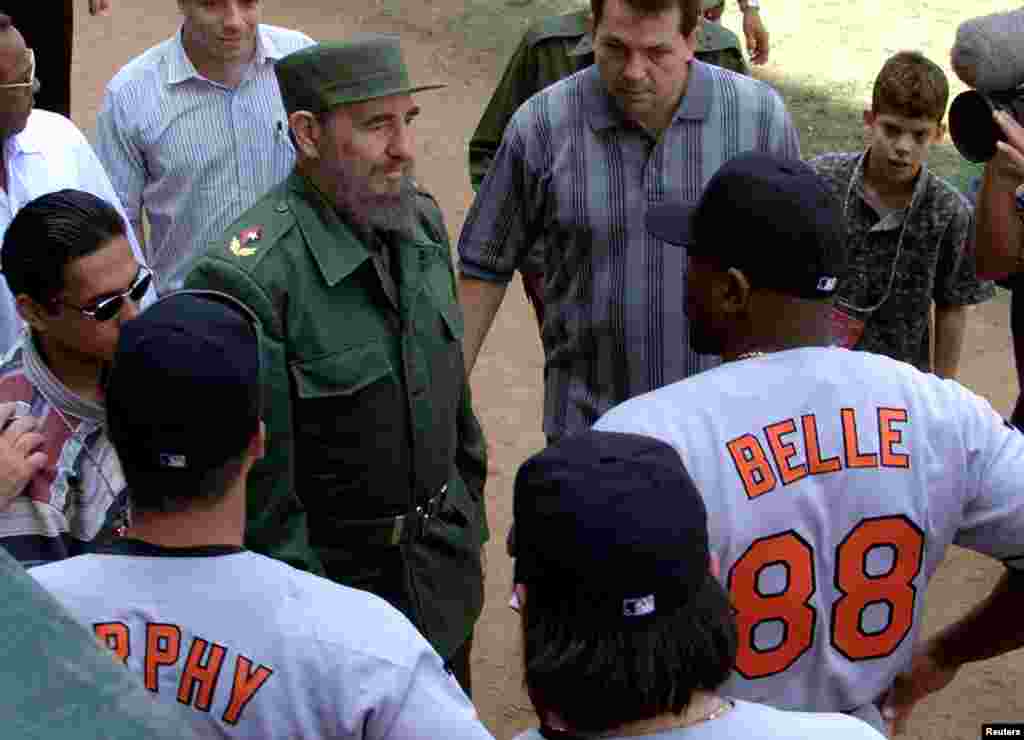
A March 28, 1999 file photo shows then-Cuban President Fidel Castro talking with Baltimore Orioles slugger Albert Belle (88) prior to the exhibition game between the Orioles and a Cuban National Team.
7/14 A March 28, 1999 file photo shows then-Cuban President Fidel Castro talking with Baltimore Orioles slugger Albert Belle (88) prior to the exhibition game between the Orioles and a Cuban National Team.
In this April 19, 2011 file photo, Fidel Castro, left, raises his brother's hand, Cuba's President Raul Castro, center, as they sing the anthem of international socialism during the 6th Communist Party Congress in Havana, Cuba.
8/14 In this April 19, 2011 file photo, Fidel Castro, left, raises his brother's hand, Cuba's President Raul Castro, center, as they sing the anthem of international socialism during the 6th Communist Party Congress in Havana, Cuba.
Children carry framed images of Fidel Castro and Che Guevara in a caravan tribute marking the 56th anniversary of the original street party that greeted a triumphant Castro and his rebel army, in Regla, Cuba, Jan. 8, 2015. Castro and his rebels arrived in Havana via caravan on the first week of January 1959, after toppling dictator Fulgencio Batista.
9/14 Children carry framed images of Fidel Castro and Che Guevara in a caravan tribute marking the 56th anniversary of the original street party that greeted a triumphant Castro and his rebel army, in Regla, Cuba, Jan. 8, 2015. Castro and his rebels arrived in Havana via caravan on the first week of January 1959, after toppling dictator Fulgencio Batista.
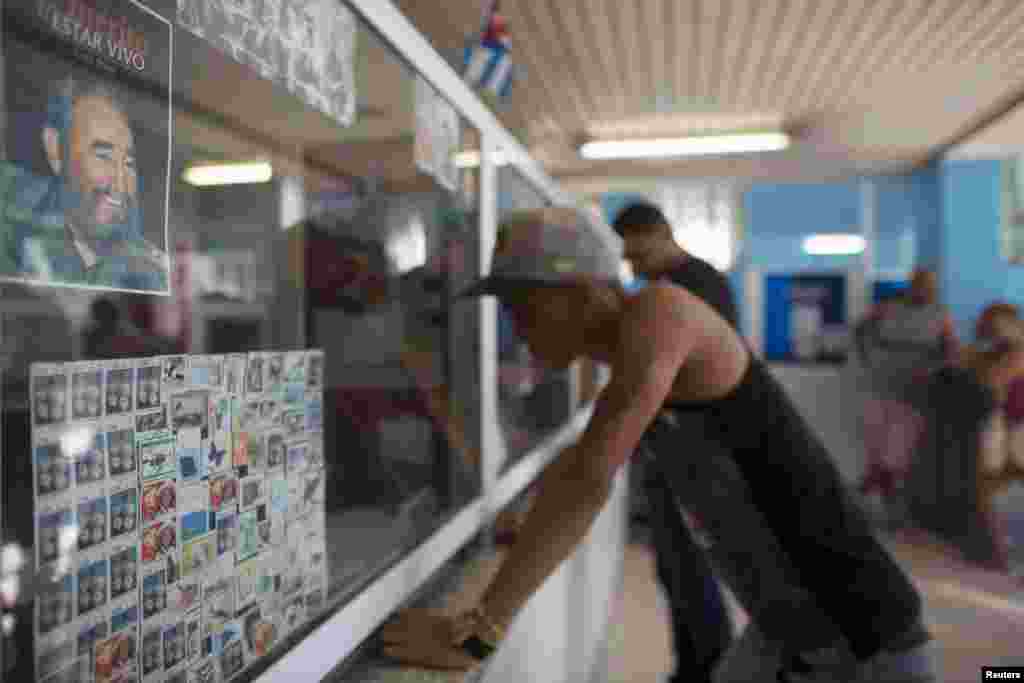
A picture of former Cuban President Fidel Castro is seen inside a post office in Havana, Dec. 11, 2015.
10/14 A picture of former Cuban President Fidel Castro is seen inside a post office in Havana, Dec. 11, 2015.
Cuban Leader Fidel Castro, center, talks with a girl during a gala for his 90th birthday at the 'Karl Marx' theater in Havana, Cuba, Saturday, Aug. 13, 2016.
11/14 Cuban Leader Fidel Castro, center, talks with a girl during a gala for his 90th birthday at the 'Karl Marx' theater in Havana, Cuba, Saturday, Aug. 13, 2016.
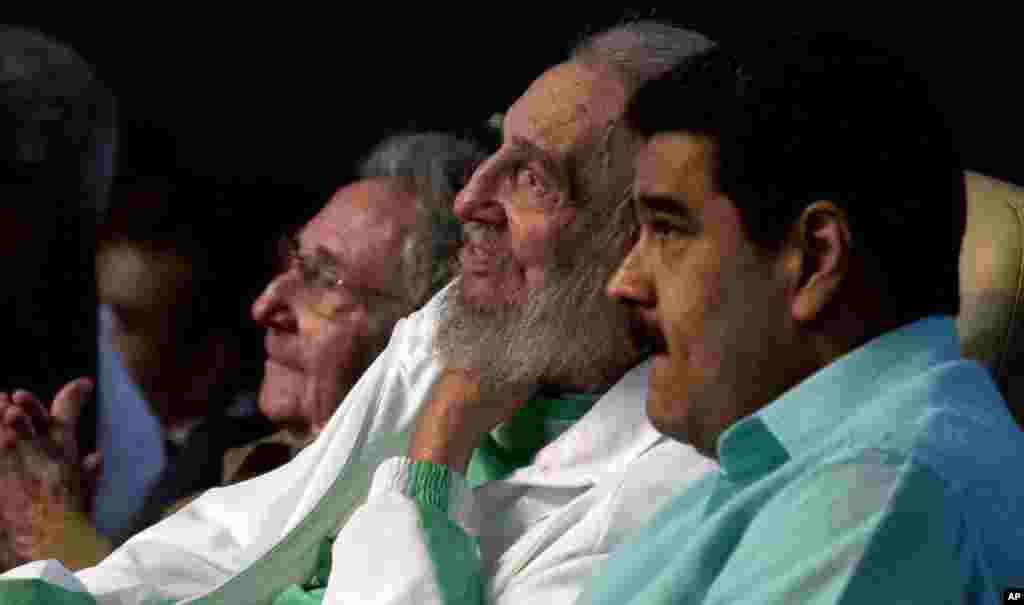
Cuban Leader Fidel Castro, center, attends a gala for his 90th birthday, Aug. 13, 2016, accompanied by Cuba's President Raul Castro, left, and Venezuela's President Nicolas Maduro, right, at the 'Karl Marx' theater in Havana, Cuba.
12/14 Cuban Leader Fidel Castro, center, attends a gala for his 90th birthday, Aug. 13, 2016, accompanied by Cuba's President Raul Castro, left, and Venezuela's President Nicolas Maduro, right, at the 'Karl Marx' theater in Havana, Cuba.
Fidel Castro sits as he clasps hands with his brother, Cuban President Raul Castro, right, and second secretary of the Central Committee, Jose Ramon Machado Ventura, moments before the playing of the Communist party hymn during the closing ceremonies of the 7th Congress of the Cuban Communist Party, in Havana, Cuba, Tuesday, April 19, 2016.
13/14 Fidel Castro sits as he clasps hands with his brother, Cuban President Raul Castro, right, and second secretary of the Central Committee, Jose Ramon Machado Ventura, moments before the playing of the Communist party hymn during the closing ceremonies of the 7th Congress of the Cuban Communist Party, in Havana, Cuba, Tuesday, April 19, 2016.
Cuba's former leader Fidel Castro, right, shakes hands with Iranian President Hassan Rouhani in Havana, Cuba, Monday, Sept 19, 2016.
14/14 Cuba's former leader Fidel Castro, right, shakes hands with Iranian President Hassan Rouhani in Havana, Cuba, Monday, Sept 19, 2016.
Previous slide
Next slide

Triumph and Communism

His victory and triumphant entry into Havana captured the world’s attention. But he soon steered the country toward Communism and the orbit of the Soviet Union.

“He is a man who made a lot of promises to the Cuban people,” said Cuban democracy activist Frank Calzon. “Cubans were going to have freedom. They were going to have honest government. They were going to have a return to the constitution. Instead what he gave them was a Stalinist type of government.”

The United States mounted an invasion of Cuba by a group of Cuban exiles in 1961. But Castro’s forces crushed the invaders at the Bay of Pigs. One year later, Cuba was at the center of a confrontation between the United States and the Soviet Union over the placement of nuclear missiles on the island. A nuclear war was narrowly averted.

As a close ally of Moscow, Castro deployed Cuban troops to various Cold War hot spots, such as Angola. His policies turned Cuba into an international player, according to Cuba expert Wayne Smith.

“I think he will be remembered as the leader who put Cuba on the world map,” Smith said. “Before Castro, Cuba was considered something of a banana republic. It did not count for anything in world politics. Castro certainly changed all that, and suddenly Cuba was playing a major role on the world stage, in Africa as an ally of the Soviet Union, in Asia, and certainly in Latin America.”

FILE - U.S. President Barack Obama attends a meeting with Cuban dissidents at the U.S. embassy in Havana, Cuba, March 22, 2016. On the wall behind Obama is a painting, "My New Friend," donated to the embassy by Michel Mirabal, a Cuban artist.

Democracy a casualty

At home, universal education and health care were accomplishments that came at the cost of human rights and democracy. Dissidents were thrown in jail and their relatives who protested were often intimidated by pro-government mobs.

“Fidel Castro kept power through fear, through the use of the secret police, through manipulating political forces — just like Stalin did or just like Hitler did,” Calzon said.

Castro frequently denounced the United States, often staging mass rallies to protest the U.S. economic embargo against his country.

Despite decades of U.S. pressure, he managed to stay in power until being sidelined by intestinal surgery in July 2006. The ailing leader formally relinquished the presidency in 2008 to his younger brother Raul, in a transfer of power endorsed in a pro-forma election by Cuba’s National Assembly.

Yet he maintained a role in public life as Cuba’s state-run newspaper published his thoughts on various subjects, including a critique of President Barack Obama’s historic visit to Cuba that underscored the normalization of ties.He also occasionally received visiting foreign dignitaries.
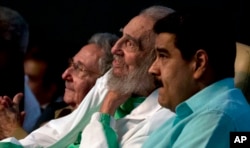
Cuban Leader Fidel Castro, center, attends a gala for his 90th birthday, Aug. 13, 2016, accompanied by Cuba's President Raul Castro, left, and Venezuela's President Nicolas Maduro, right, at the Karl Marx theater in Havana, Cuba.

Large historical figure

His continued presence on the world stage made him unique, says Cuba specialist Phil Peters.

“I think all admit he was a very large historical figure who won a very impressive military victory in the Cuban revolution, who maneuvered through very difficult circumstances in the international sphere,” Peters, of the Lexington Institute, said. “He put Cuba on the map, in many ways, far beyond its importance in history, far beyond its economic capabilities.”
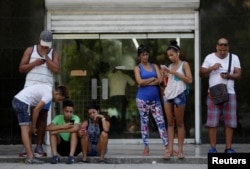
FILE - Cubans use the internet via public Wi-Fi in Havana, Cuba, Sept. 5, 2016. By the end of the year, Cuba promises to bring the internet to homes in Old Havana.

But the Cuban people paid a heavy price, Calzon, the democracy activist said.

“Whatever good he did, the cost that the Cuban people have had to pay in lives, in suffering, in torture far exceeds whatever positive could be said about him,” Calzon said.

Tyrant or revolutionary, Fidel Castro remained at the center of the world’s media spotlight until the end — an object of fascination for some and repudiation for others.

XS
SM
MD
LG