

Accessibility links

Breaking News

Solar Plant to Launch at Chernobyl Nuclear Site

Solar Power Farm Sprouts at Chernobyl Nuclear Site
please wait

No media source currently available

0:00 0:02:57 0:00

Solar Power Farm Sprouts at Chernobyl Nuclear Site

Solar Plant to Launch at Chernobyl
please wait

No media source currently available

0:00 0:02:04 0:00

Thirty years after the world’s worst nuclear disaster, Chernobyl is about to become a solar farm.

Officials in Ukraine plan to build a solar energy plant at the Chernobyl nuclear site. The announcement comes during the week of the 31st anniversary of the Chernobyl nuclear accident.

The Chernobyl accident occurred on April 26, 1986. The incident would become the world's worst nuclear accident. 32 people died and dozens of others suffered painful radiation burns.

Until recently, the government of Ukraine has largely ignored the area.

Ostap Semerak is Ukraine’s minister of ecology. He spoke with VOA about the planned solar project.

"Today, almost a year after we have started the work, I can announce the first private investment project working in the Chernobyl zone to build a small solar energy plant.”

Semerak says more than 50 national and international companies have expressed interest in building the solar plant. He adds that when completed, the project will produce about half the power produced by the Chernobyl nuclear plant.

"We have received over 50 applications from companies of various sizes. Cumulatively, those would be enough to produce 2.5 gigawatts of power, which would be 2,500 megawatts. This is comparable to the output by two units of a nuclear power plant. This is about half the capacity which the Chernobyl power plant had before the disaster."

Officials expect to complete the solar plant project in May.

I’m Jonathan Evans.

31 Years Later, Chernobyl Disaster Remembered
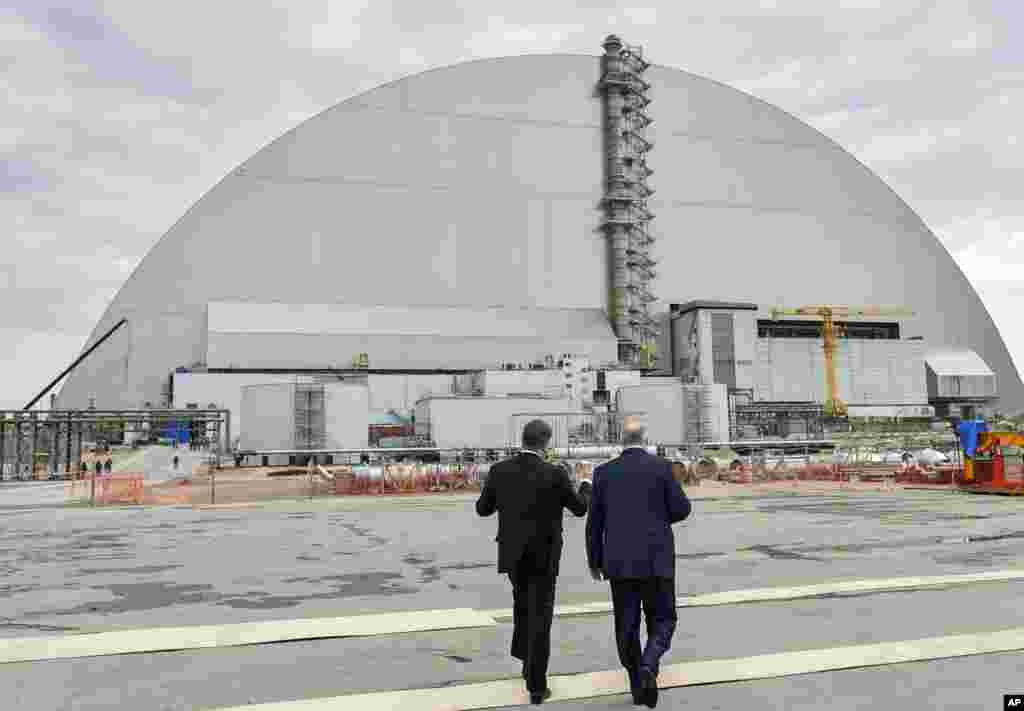
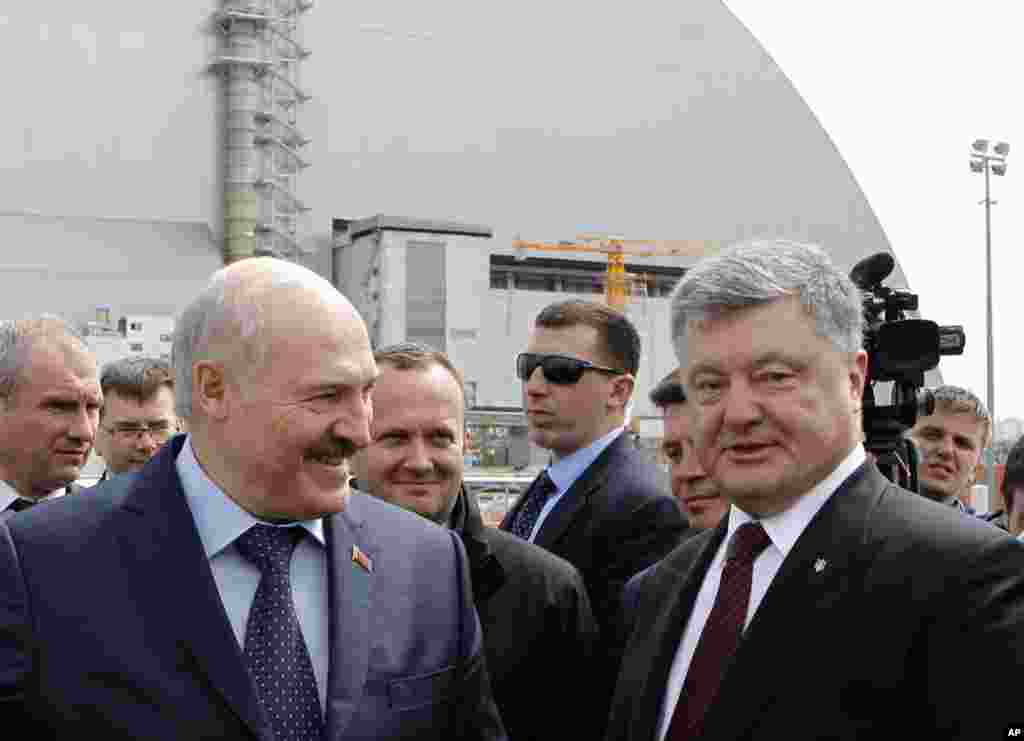
Ukrainian President Petro Poroshenko, left, and Belarusian President Alexander Lukashenko visit the Chernobyl nuclear power plant in Chernobyl, Ukraine, marking the 31st anniversary of the Chernobyl nuclear disaster, April 26, 2017.
1/14 Ukrainian President Petro Poroshenko, left, and Belarusian President Alexander Lukashenko visit the Chernobyl nuclear power plant in Chernobyl, Ukraine, marking the 31st anniversary of the Chernobyl nuclear disaster, April 26, 2017.
Widows of Chernobyl victims hold portraits of their husbands who died following the clean-up operations for the 1986 Chernobyl nuclear explosion, at Chernobyl's victim monument in Ukraine's capital Kyiv, April 26, 2017.
2/14 Widows of Chernobyl victims hold portraits of their husbands who died following the clean-up operations for the 1986 Chernobyl nuclear explosion, at Chernobyl's victim monument in Ukraine's capital Kyiv, April 26, 2017.
Demonstrators march marking the 31st anniversary of the Chernobyl nuclear power plant disaster in Minsk, Belarus, April 26, 2017. About 400 people have marched in the capital of Belarus to mark the anniversary of the Chernobyl nuclear power plant disaster and protest the construction of a nuclear plant in Belarus.
3/14 Demonstrators march marking the 31st anniversary of the Chernobyl nuclear power plant disaster in Minsk, Belarus, April 26, 2017. About 400 people have marched in the capital of Belarus to mark the anniversary of the Chernobyl nuclear power plant disaster and protest the construction of a nuclear plant in Belarus.
Ukrainian President Petro Poroshenko, right, and Belarus President Alexander Lukashenko visit the Chernobyl nuclear power plant in Chernobyl, Ukraine, April 26, 2017. April 26 marks the 31st anniversary of the Chernobyl nuclear disaster.
4/14 Ukrainian President Petro Poroshenko, right, and Belarus President Alexander Lukashenko visit the Chernobyl nuclear power plant in Chernobyl, Ukraine, April 26, 2017. April 26 marks the 31st anniversary of the Chernobyl nuclear disaster.
The entrance to the restricted Chernobyl zone, in which no one, on the Ukrainian side, is allowed to live within 30 kilometers of the destroyed nuclear reactor. (Arash Arabasadi/VOA)
5/14 The entrance to the restricted Chernobyl zone, in which no one, on the Ukrainian side, is allowed to live within 30 kilometers of the destroyed nuclear reactor. (Arash Arabasadi/VOA)
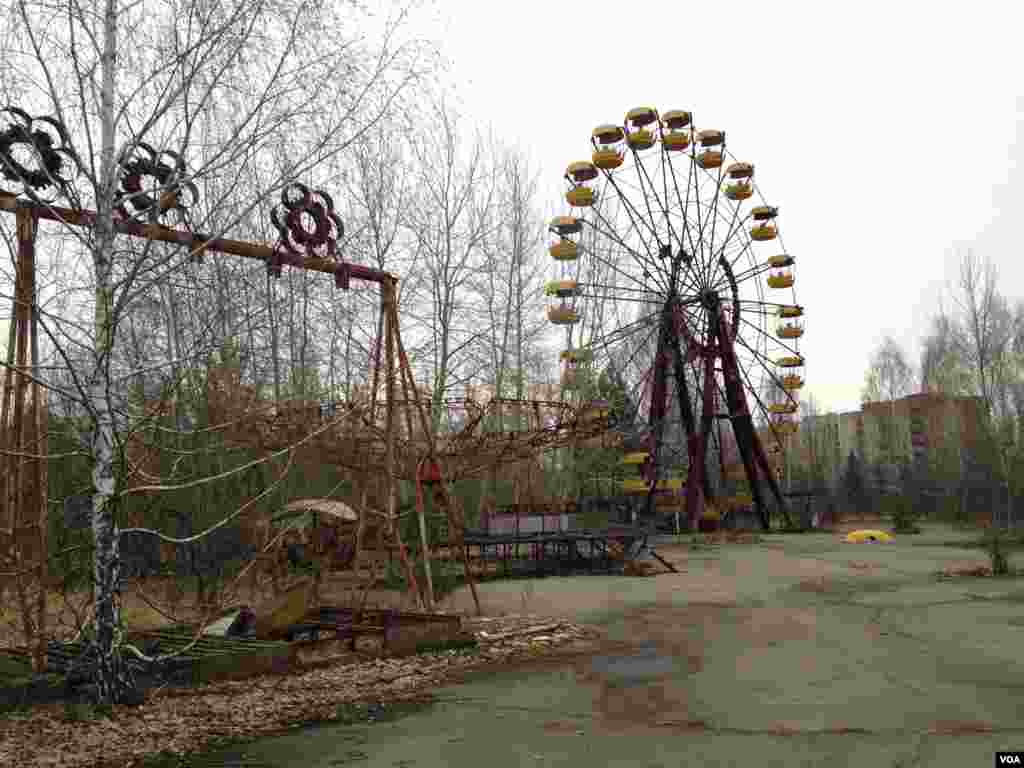
A rusting ride for children in the highly radioactive abandoned amusement park in Pripyat. (Steve Herman/VOA)
6/14 A rusting ride for children in the highly radioactive abandoned amusement park in Pripyat. (Steve Herman/VOA)
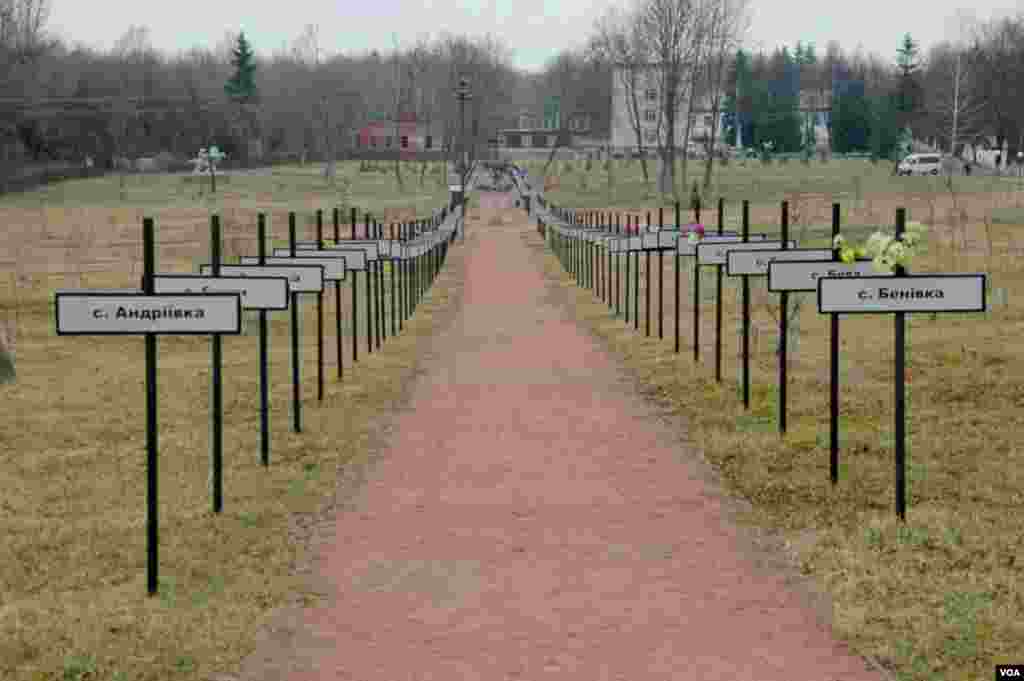
A monument commemorating permanently evacuated towns and villages inside the exclusion zone. (Steve Herman/VOA)
7/14 A monument commemorating permanently evacuated towns and villages inside the exclusion zone. (Steve Herman/VOA)
A cashier uses an abacus at one of the few commercial establishments inside the Chernobyl exclusion zone. (Steve Herman/VOA)
8/14 A cashier uses an abacus at one of the few commercial establishments inside the Chernobyl exclusion zone. (Steve Herman/VOA)
The Ferris wheel in the Pripyat amusement park, now an iconic symbol to a younger generation born after the Chernobyl disaster, thanks to its inclusion in the video game: Call of Duty 4: Modern Warfare.
9/14 The Ferris wheel in the Pripyat amusement park, now an iconic symbol to a younger generation born after the Chernobyl disaster, thanks to its inclusion in the video game: Call of Duty 4: Modern Warfare.
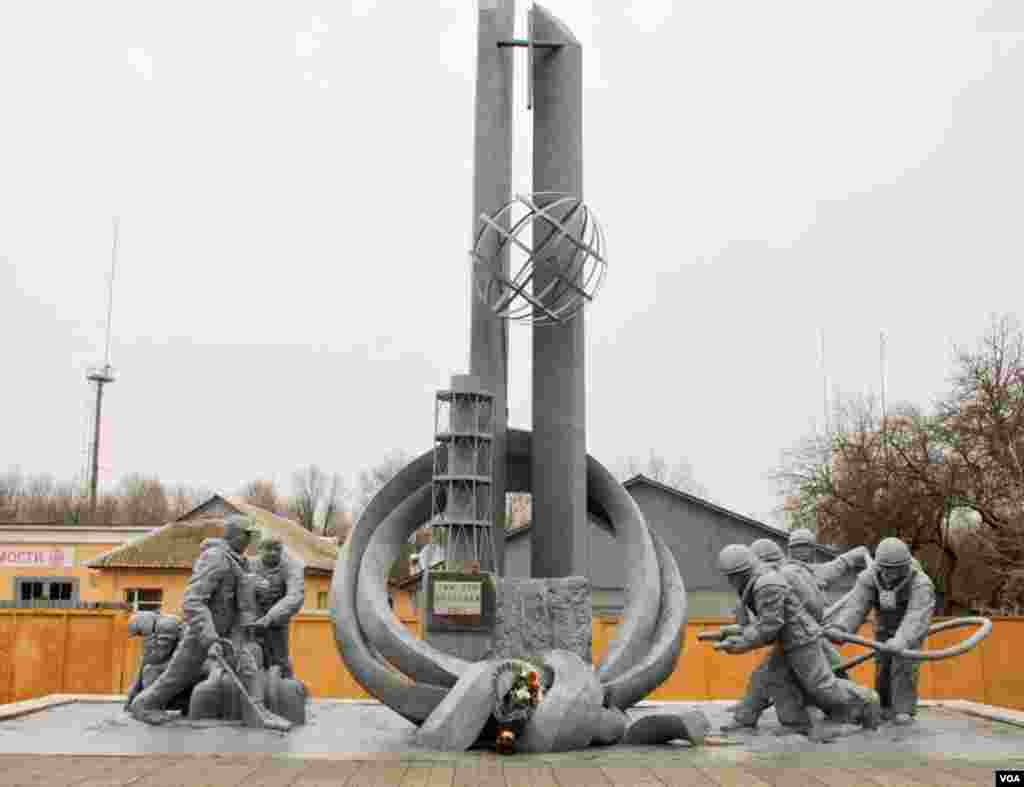
A monument in front of a Chernobyl fire station to the 32 firefighters who died responding to the explosion at Reactor No. 4. (Steve Herman/VOA)
10/14 A monument in front of a Chernobyl fire station to the 32 firefighters who died responding to the explosion at Reactor No. 4. (Steve Herman/VOA)
A saleswoman of the bakery Schuerener Backparadies shows a tray with round marble cakes wrapped in fondant that look like toilet paper rolls in Dortmund, Germany.
11/14 A saleswoman of the bakery Schuerener Backparadies shows a tray with round marble cakes wrapped in fondant that look like toilet paper rolls in Dortmund, Germany.
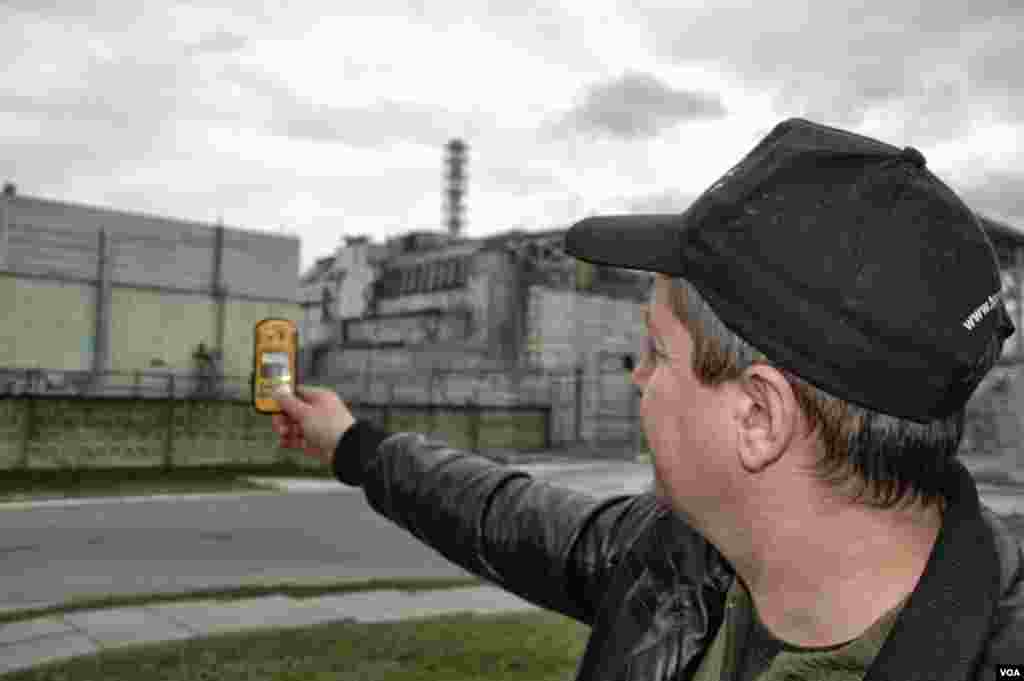
Driver Igor Bordnarch, a frequent visitor to the Chernobyl reactor site, checks radiation readings just 240 meters from the destroyed reactor. (Steve Herman/VOA)
12/14 Driver Igor Bordnarch, a frequent visitor to the Chernobyl reactor site, checks radiation readings just 240 meters from the destroyed reactor. (Steve Herman/VOA)
An unusually high radiation reading of about 172 micro-sieverts per hour over some vegetation on the ground of the Pripyat amusement park. (Steve Herman/VOA)
13/14 An unusually high radiation reading of about 172 micro-sieverts per hour over some vegetation on the ground of the Pripyat amusement park. (Steve Herman/VOA)
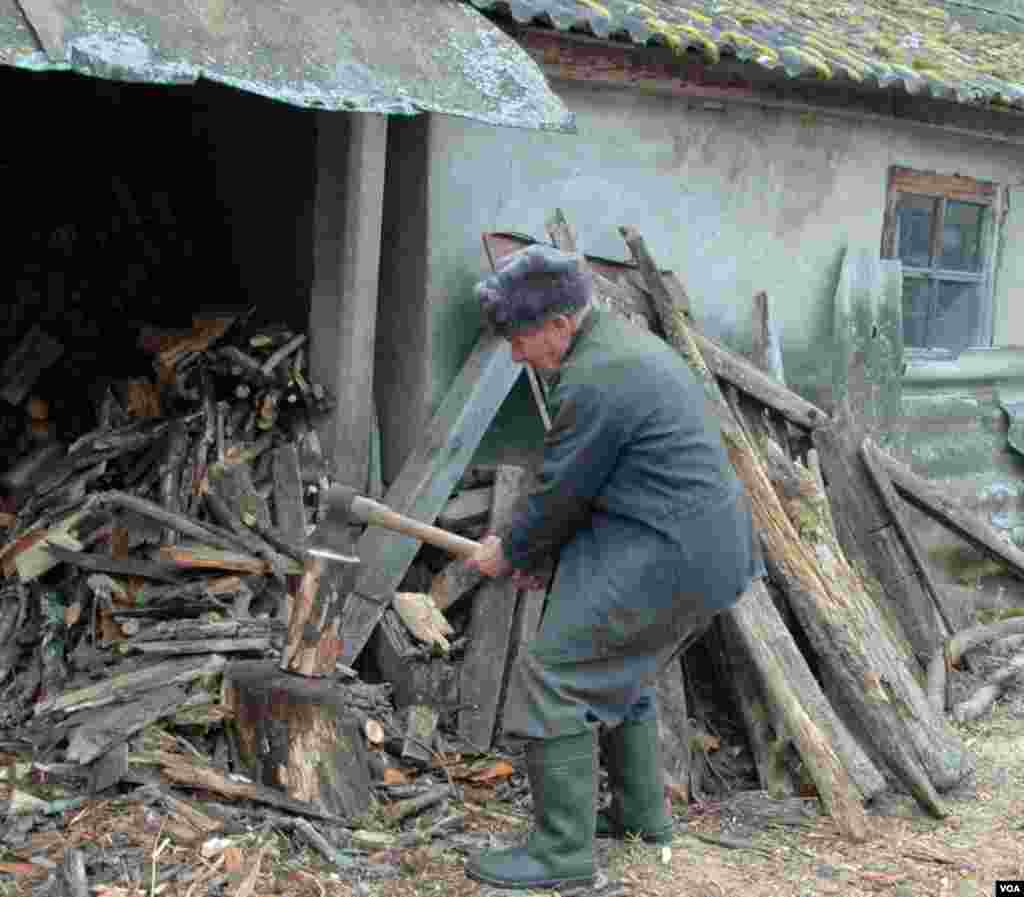
Ivan Semenuk, 78, has illegally returned to his home in the village of Paryshiv in the exclusion zone. (Steve Herman/VOA)
14/14 Ivan Semenuk, 78, has illegally returned to his home in the village of Paryshiv in the exclusion zone. (Steve Herman/VOA)
Previous slide
Next slide

Oksana Ligostova and Ruslan Deynychencko reported this story for VOA. Jonathan Evans adapted the report for Learning English. Hai Do was the editor.

________________________________________________________________

Words in this Story

capacity – n. the amount of something that can be produced or managed by a factory, company, etc.

ecology – n. a science that deals with the relationships between groups of living things and their environments

This item is part of
XS
SM
MD
LG